

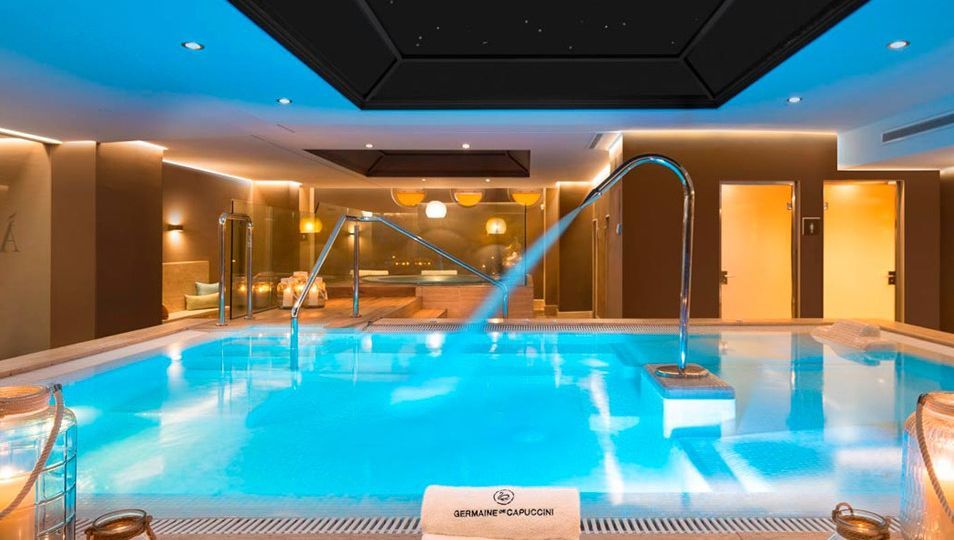
Air treatment in heated pools and spas in hotel facilities
Air treatment in heated pools and spas has a great relevance in hotel facilities and affects health, comfort, energy consumption, maintenance of the facilities, their durability and structural parameters and finishes of the enclosure.
In this article, it is about explaining with simple words, complex thermodynamic aspects that are fundamental for operation and conservation, optimizing energy consumption, improving sustainability and reducing environmental impact.
There are many installations (and this is one of them), in which, at the same time that energy consumption is reduced, aspects related to health and comfort are increased. For this, it is necessary to know the air treatment techniques that have special connotations in these facilities.
Approaches are variable and conditioned by external climatological aspects that suitably managed, can affect very favorably in the applied treatments.
Maintaining adequate hygrothermal conditions in the enclosures, is of great importance due to the fact that by remaining a part of the body exposed directly without any protection, small variations have a great impact on comfort.
Given the required degrees of temperature and humidity, it is necessary to analyze the operation during the activity and the hours in which it remains closed. When the installation is out of service, it requires a special operation aimed at protecting the structural and finishing elements, minimizing the energy consumption required.
Basic technical concepts
The basic technical concepts involved in air treatment are:
Temperature
It is a physical magnitude that measures the thermal level of the bodies.
The thermal level of a body is directly related to the activity of its particles (atoms and molecules).
As this activity increases, the temperature increases.
The units in which they are measured are:
degrees Celsius or centigrade ºC
Kelvin ºK degrees
Fahrenheit ºF degrees
Humidity
It is the amount of water vapor in the air.
The moisture content in the air depends on the temperature.
You have to distinguish between:
Absolute humidity
- Corresponds to the body of water existing in the air
relative humidity
- It is the percentage of existing water vapor, with respect to the total that the saturated air (100%) can admit at a certain temperature.
heat transmission
It is a physical process by which thermal energy is transferred between two systems in which there are differences in temperatures.
It goes from the hottest to the coldest.
It can be for:
Transmission
- in solids by direct transfer between the particles that form it.
Convection
- in fluids (liquid or gas) by displacement of particles
Natural
- The fluid moves as a function of its density.
- The lighter particles are positioned at the top
- the heaviest at the bottom.
forced
- Use a mechanical medium such as a fan or a pump.
Radiation
- by electromagnetic waves
- The bodies do not come into contact
- As an example the sun can serve.
Evaporation
It is a physical process by which a liquid passes to steam, at any temperature and without the need to reach the boiling temperature.
- It only affects the surface of the liquid and in the case of water, to that the relative humidity of the enclosure is less than 100%.
- It is a slow process.
- It needs energy for the change of state to occur.
Condensation
It is a physical process by which a substance passes from gas to liquid.
- occurs when a temperature drop occurs.
- It is the opposite of evaporation.
- Release energy.
Overpressures and depressions
It occurs in a closed system when the pressure is higher or lower than atmospheric.
In an open enclosure, the pressure is equal to the atmospheric
Overpressure
- If in a closed space that is initially at atmospheric pressure, air is injected through a fan.
- The indoor air is compressed and overpressure occurs.
Depression
- It is the opposite and occurs when from a closed space that is initially at atmospheric pressure, an air flow is extracted
comfort conditions
It is established in the regulations of each country.
Taking the RITE as a reference, (Spanish Thermal Installation Regulations), the following values are established:
Temperature
- It will be higher between 1ºC. and 2ºC., at the temperature of the vessel with a maximum of 30ºC.
- In Spain it is mandatory. Rite (IT 1.1.4.1.2)
relative humidity
- It will always remain below 65% to protect enclosures from condensation.
- In Spain it is mandatory. Rite (IT 1.1.4.1.2)
air quality
- The required air quality corresponds to good quality air. In the RITE IDA 2 is specified.
- In Spain it is mandatory. Rite (IT 1.1.4.1.2)
Ventilation
- The outside air needed to dilute contaminants must be 2.5 dm³/s per m² of surface of the sheet of water and the beach.
- In Spain it is mandatory. RITE (IT 1.1.4.2.3)
Pressure
- A negative pressure of between 20 and 40 Pa (pascals) must be maintained with respect to adjoining premises.
- In Spain it is mandatory. RITE (IT 1.1.4.2.3)
CO concentration2.
- For air with quality IDA 2 the maximum concentration will not exceed 500 p.p.m. (parts per million) the CO2 of outside air.
- In Spain it is mandatory. RITE (IT 1.1.4.2.3)
CO concentration2.
- For air with quality IDA 2 the maximum concentration will not exceed 500 p.p.m. (parts per million) the CO2 of outside air.
- In Spain it is mandatory. RITE (IT 1.1.4.2.3)
Chlorine in the air
- normally included in complementary regulations of a regional or local nature.
Energy savings requirements
The energy consumption for the treatment of the air of a pool is relatively high, so the regulations require provisions that optimize it.
Barrier to cover the pool
- Heated pools must be protected with thermal barriers to avoid heat loss by evaporation when not in use.
- In Spain it is mandatory. rite (It 1.2.4.5.5).
- This aspect has a great impact on the necessary treatment that must be given to the air to reduce energy consumption.
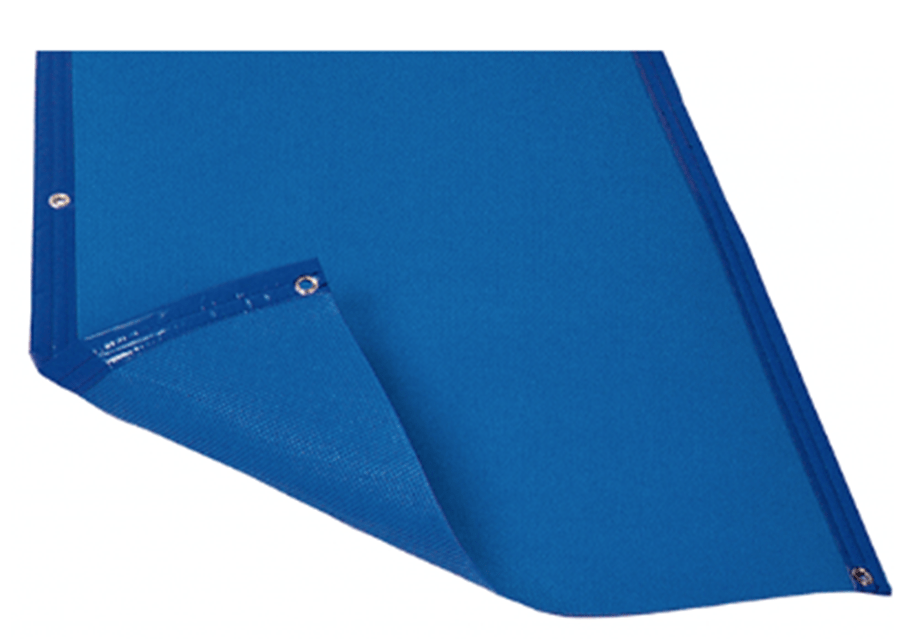
Astral Pool Isothermal Cover
water heating
- The water temperature should be between 24°C and 30°C depending on the main use of the pool (excluding therapeutic uses). The temperature tolerance must not exceed ±1.5°C.
- In Spain it is mandatory. rite (It 1.1.4.3.2).
Heat recovery
- The thermal energy of the expelled air must be recovered with a minimum efficiency and maximum pressure losses depending on the flow.
- In Spain it is mandatory. rite (It 1.2.4.5.2).
Air treatment and diffusion
To obtain the conditions of comfort, conservation and maintenance, the air requires a treatment of:
- Temperature
- Humidity
- Ventilation
- Diffusion
- Return
water temperature
- between 24ºC. and 30ºC.
- The air temperature must be referenced to the water temperature increased by 1ºC or 2ºC., with a maximum of 30ºC.
- As the temperature of the water increases, the evaporation is greater and therefore the energy consumption.
Relative Humidity (H.R.)
- It is one of the most important parameters in the heated pools.
- For comfort reasons, the RITE establishes that the enclosures are designed for a H.R. of 60% maximum.
- In heated pools set the top of 65%.
- As relative humidity increases, evaporation decreases, because the air is closer to saturation (100% R.).
- In relation to comfort, a partially naked body covered with water dissipates more quickly in a drier environment.
- If the relative humidity is closer to 65%, the evaporation decreases and the comfort is higher when the skin is wet.
- With dry skin, 60% of H.R. is more comfortable.
- Evaporation is a process of change of state in which the drops of water located on the skin evaporate and this causes a cooling in the body.
- The same happens with the water that evaporates in the pool.
- With lower relative humidity, evaporation increases, causes further cooling of the pool water that needs to be replenished and requires a higher amount of energy to maintain the setpoint values.
- Air needs relatively high energy to reduce moisture.
- Therefore, if the relative humidity remains at high values, the energy consumption decreases.
- In brief
- A high relative humidity:
- Increases the feeling of comfort in the evaporation that occurs on the surface of the skin of bathers.
- Reduces energy consumption in pool water maintenance
- Reduces energy consumption in air drying.
- lower relative humidity:
- Increases the feeling of comfort of people who are not using the pool and settle in the rest area.
- Improves the conservation of the walls, structural elements and maintenance of the facilities.
- Increases energy consumption when the pool is operational.
- In closing periods, options can be analyzed that prevent this increase.
- A high relative humidity:
Ventilation
- Maintaining the necessary air renewal for acceptable air quality is essential.
- In indoor pools, in addition to the parameters required by state regulations, there are others of a local or regional nature.
- In all cases, it is mandatory to control the concentration of CO2.
- There are also other requirements in ventilation.
Example:
In Andalusia, in addition to national demands, regional legislation requires the control of total chlorine in the air.
Decree no. 485/2019 of the Ministry of Health and Families, of June 4. Approves the technical-sanitary regulations of the pools in Andalusia
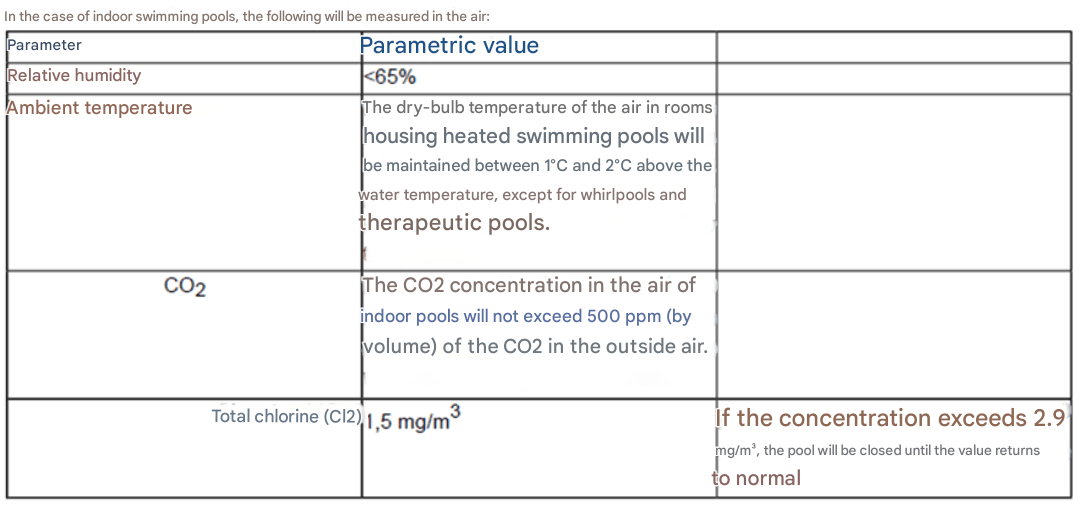
- With regard to ventilation in a good engineering design, it is possible to opt for treatments in which all the potential offered by outdoor air is used and at the same time improves health and comfort, considerably reducing energy consumption.
Diffusion
The air is distributed within the enclosure at variable temperatures based on the hygrothermal needs demanded.
- The air is distributed within the enclosure at variable temperatures based on the hygrothermal needs demanded.
- It is necessary to avoid the incidence of air currents on the skin of users, and must comply with the regulatory requirements that appear in the specific regulations. (in Spain the RITE) (IT 1.1.4.1.3)
- Therefore, and based on the construction conditions of the enclosure, it is necessary to design a distribution network based on diffusers that provide the necessary induction to avoid annoying currents.
Return
- In an enclosure in which the humidity is high, it is necessary to design an air return system that guarantees the sweep in all the walls.
- If, for example, there are areas where a correct recirculation is not made, condensations can occur that affect the health and conservation of the construction elements.
Health and maintenance aspects
- A high relative humidity, in addition to the indicated comfort problems, can cause the proliferation of fungi, molds or bacteria that develop in hot and humid environments that can cause respiratory conditions, especially to sensitive people.
- On the other hand, the coatings are affected, causing corrosion in metallic elements, damage to wood, degradation of coatings and reduction of the useful life of the air conditioning systems.
- All this increases energy consumption and maintenance costs.
- That is why these facilities require continuous operation even when they are not open to the public.
Air treatment equipment
To obtain the comfort conditions it is necessary to regulate the humidity and the temperature of the air, in addition to ensuring the necessary ventilation at all times.
The humidity of an enclosure can basically be eliminated in two ways:
- passing the air through a cold battery.
- A condensation occurs and part of the water vapor it contains is removed.
- providing drier outdoor air, with a lower moisture content.
- Air is removed from the enclosure and replaced by drier outside air.
The temperature in a pool room is regulated:
- increasing or decreasing the temperature of the air provided.
In principle, two basic options are contemplated:
- dehumidifier
- air conditioner
dehumidifier
The dehumidifier is a refrigeration equipment based on the compression cycle of the air-to-air type that performs the following function.
Evaporator
- Vacuum wet air from the pool enclosure.
- Part of the water vapor condenses when it passes through the cooling battery.
- These water droplets are collected on a tray and evacuated to a drain.
- The air leaves the evaporator at a lower temperature and with a lower amount of water.
- Then the air continues its way to the condenser
Condenser
- Collect the air from the evaporator
- It heats up when it comes into contact with the condensing battery.
- The air is returned to the enclosure with the same amount of water that comes out of the evaporator and at a temperature higher than that of the enclosure.
With respect to dehumidifiers there are two options, the basic one and the one with complementary elements.
- The basic option consists of one or more autonomous equipment that is installed inside the room and that only controls humidity.
- The air comes out drier at a higher temperature.
- If to obtain the humidity established in the setpoint, overheating occurs, it is necessary to regulate it using complementary equipment.
- Ventilation must also be guaranteed using complementary equipment.
- In installations of some importance, it is necessary to use dehumidifiers with complementary elements that regulate temperature and humidity.
- To do this, in addition to the dehumidifier itself, it is necessary to install a series of elements, typical of an air conditioner, for example.
- Heat supplementary battery.
- free-cooling
- RECOVERY
- The adjustment that can be given to a dehumidifier is far from the precision that can be obtained with a climate control.
- As it exists in the excess heat dehumidifiers, which must be dissipated on many occasions and that causes great losses in the operation, it is recommended that they come equipped with an auxiliary exchanger that allows their use in the heating of the pool water.
- In that case, you can take advantage of a percentage of the energy that is lost.
air conditioner
The air conditioner is a custom equipment with two batteries, (cold and heat) that connect to the hotel’s cooling and heating production equipment.
Therefore, both cold and heated energy are supplied by the chiller and the boiler or heat pump corresponding to heating.
The flexibility and quality in the air treatment of a air conditioner is far superior to that which can be achieved with a self-contained dehumidifier.
Having heat and cold energy, this option is much more economical.
The only problem that an air conditioner can pose is that cold is required for dehumidification without the chillers being in service.
- It could occur on warm days with high temperatures.
- If you want to cover that contingency, a small chiller would be necessary during that period.
In relation to heat, there will always be availability due to the need for domestic hot water production, which requires the operation of boilers or thermal heat pumps.
Technical analysis of dehumidification
The content of the water vapor in the air depends on the temperature.
- The lower the temperature, the lower the water vapor content.
- The higher the temperature, the higher the water vapor content.
Winter dehumidification
In winter the outside temperature is low.
To analyze the phenomenon of dehumidacion, an example of all known ones will be taken and it is how a glass of cold beer behaves in a normal environment of 26ºC. and 60% H.R.
Psychrometric abacuses are used only for illustrative purposes, which define the air conditions in the enclosure and of which only relative humidity is interested.
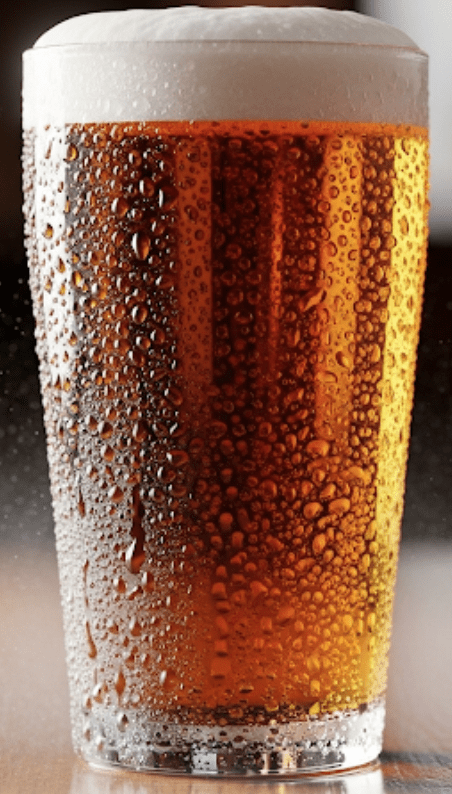
Temperature 26ºC., with 60% relative humidity.
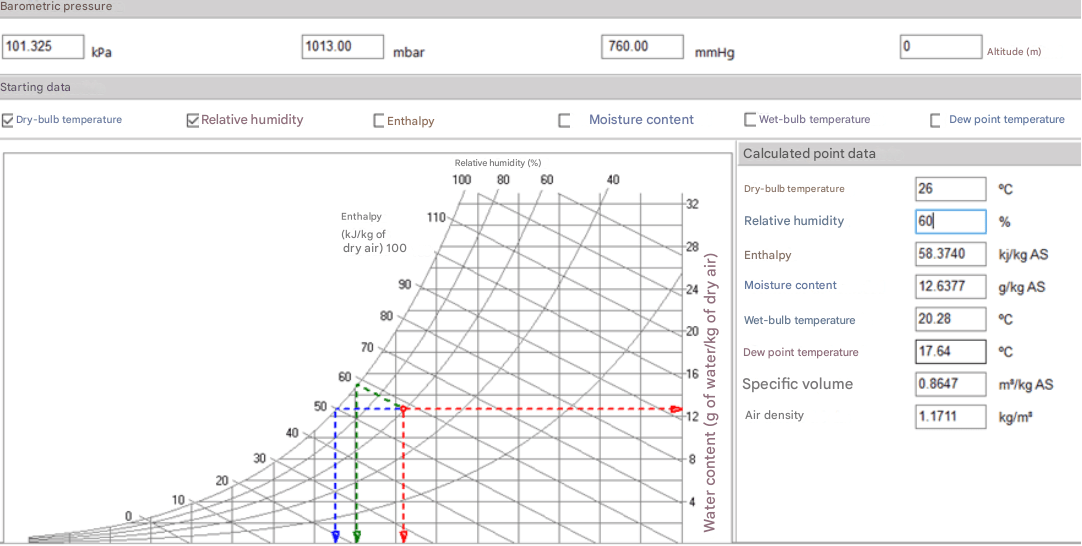
- The water vapor content in the air is 12.64 grams/kg. dry air. (It is the absolute humidity of the air in the enclosure at 26ºC. with 60% of H.R.)
- If the surface of the glass that contains the beer is at 7ºC.
- with 7ºC. and 100% relative humidity:
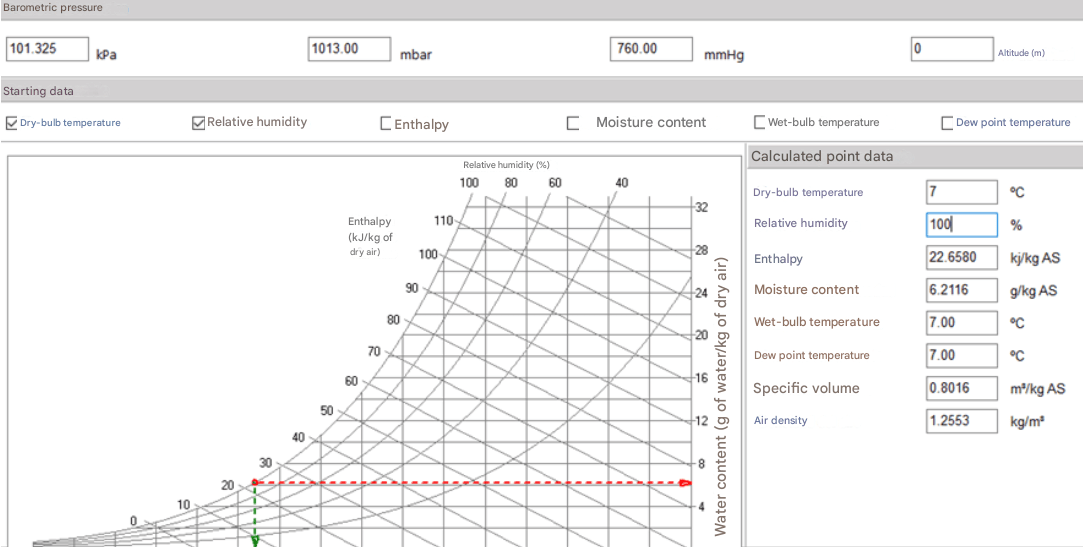
- The water vapor content in the air is 6.21 grams/kg of dry air. (It is the absolute humidity that the air could reach at a temperature of 7ºC. and 100% H.R.)
- which indicates that the air that surrounds the glass, being at 7ºC., cannot contain more than 6.21 grams per kg. dry air.
- Taking into account that in the enclosure there are 12.64 grams, on the cold surface it condenses:
- 12.64 – 6.21 = 6.43 grams of water per kg. dry air
- that are deposited around the glass in the form of drops.
- In addition, the condensation process releases energy by increasing the temperature of the beer.
It has been exposed with the example of beer what happens in any cold battery in terms of condensation.
When the water vapor finds a colder surface, it condenses the excess water at that temperature.
The air leaves the battery colder and with a lower amount of water vapor.
The same effect in winter can be achieved by providing the coldest outdoor air.
- If it’s raining.
- The temperature is 7ºC.
- 100% relative air humidity.
- That air only contains a maximum amount of water vapor of 6.21 grams per kg. dry air.
- When inserting it into the enclosure, it undergoes heating.
- Indicate that the heating does not affect the water vapor content of the air.
- Suppose that air is heated to a temperature of 35ºC.
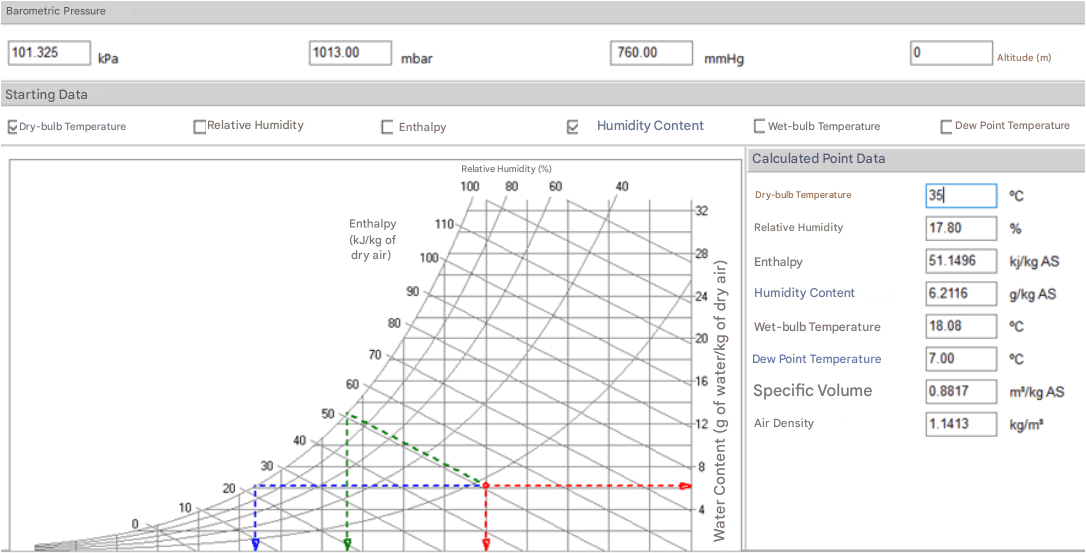
- The air would enter the enclosure with a very low relative humidity of 17.8% H.R., and this is because at 35ºC, the air admits a greater amount of water vapor.
- This air when mixed with the existing air reduces the ambient humidity.
- Keep in mind that the water vapor content of the air inside with 26ºC. and 60% of H.R. is 12.64 g./kg. and that the air that is supplied from the outside is 6.21 g./kg.
SUMMER DEHEMUTION
In summer with high temperatures, the relative humidity will depend on the location of the hotel.
If the hotel is a dry climate, the outside relative humidity will not be very high.
If the hotel is located in a coastal area, the relative humidity outside is usually high.
As long as the moisture content of the outside air is higher than the indoor air, the best option is to recirculate, passing it through the cold battery so that the excess water vapor condenses.
The driest air (with less water vapor content) is returned to the enclosure to mix it with the existing air.
In that case, it is necessary that the cold battery operate to condense the excess water vapor until the relative humidity of the setpoint is achieved.
also through the CO probes2 and chlorine, the necessary supply of outside air must be regulated.
Clean air must always be a priority for health reasons, regardless of whether a greater refrigeration power is required to reach the relative humidity established in the setpoint.
Energy optimization and air quality in operation
Regarding the energy optimization of performance, the two systems that are generally used for air treatment are analyzed:
dehumidifier
As the dehumidifier is a refrigerating equipment, whenever it requires removing moisture, it produces heat.
The need to dehumidify with the necessary calorific needs at that time hardly coincides. This only happens on time.
Given that it is the drying needs that determine its operation, there may be moments that over heat (the most generic), or that lacks heat to achieve the setpoint temperature. (Requires installation of a complementary heat battery).
If there is plenty of heat (the most generic), you have to carry out an installation that dissipates it and that prevents the overheating of the enclosure.
A heat that is not used and that needs to be dissipated is produced, which causes high and unnecessary energy consumption.
Another aspect is the regulation of the dehumidifier itself, which is generally composed of compressors of a fixed power, with which the temperatures and humidity will oscillate between ranges of humidity and wider temperatures.
air conditioner
For a long period, (practically all winter and moments with somewhat low outside temperatures) it is not necessary to use energy to dehumidify, it is done by the outside air.
For this reason, it is very important that the air conditioners have engines with a variation of speed that provide the necessary air flow at all times.
This option can be used, with intermediate or relatively high outside temperatures, provided that the humidity contained in the outside air is lower than that of the air in the enclosure.
- In these cases, the energy contribution to dehumidify will only be complementary.
In addition to reducing energy consumption in a significant way, comfort is greatly improved due to the supply of totally clean outside air.
In relation to temperature, it is adjusted to the necessary at all times, being only a function of demand and totally independent of dehumidification.
The temperature and humidity regulations are very flexible, allowing you to adjust at all times the hygrometric conditions that are desired.
The air conditioner has much lower consumption and much higher performance.
Compared to the option of the dehumidifier, the basic operation of a air conditioner would be as follows:
Winter performance
- Control humidity using outside air.
- Heat battery temperature control.
- The chiller doesn’t work
Summer performance
- Control humidity using cooling battery (only the necessary complement).
- When the outside air has lower moisture content, this totally free energy is also used in drying.
- Heat battery temperature control.
- only if necessary.
- The chiller that provides refrigeration to the hotel works to complete the drying process.
intermediate season
- The control detects the moisture content of the outside air.
- If it is less than indoor air, outside air is always used.
- If it is greater, indoor air is used and the renovations are controlled by the air quality probes.
- During the intermediate season a few days and a few hours will function as summer and others as winter.
Heat recovery
- It consists of a heat exchange between the air that is expelled to the outside and the air that is provided.
- The required effectiveness is specified in the specific regulations. In Spain the RITE.
- It is an optional that needs to be installed in the dehumidifier or being part of the air conditioner.
air quality
- In principle there may be a need to ventilate by:
- co2.
- chlorine concentration.
- Both in one case and in another, the air quality has to prevail, so outside air is provided.
Air treatment outside of business hours
To integrate heat recovery into the domestic hot water production circuit, it is necessary to:
Outside operating hours, the installation must be kept in operation to avoid deterioration caused by high relative humidity.
Taking into account the drop in temperature of the nights, a large part of this treatment can be carried out with outside air.
The air conditioning with variable air volume is the most recommended and economical option.
cover the pool surface
- The greatest contribution of water vapor to the enclosure is produced by evaporation.
- Even in the case of an irregular pool, if only partially covered, the covered part does not evaporate.
- Its installation is mandatory.
Pool water temperature with cover
- Pool water will not have significant losses as long as evaporation is avoided.
- They would only be transmission losses that are relatively small and replenished in a short period of time.
- In any case, it is necessary to analyze the particularities in each case.
Pool water temperature without cover
- violates the regulations.
- It is not necessary to keep it, outside the hours of operation.
- The losses are very high.
- Evaporation occurs, which cools the pool water.
- It is best to let it cool down to the limits allowed by the heating equipment installed.
relative humidity
- It is the most important parameter and you have to always control it.
- affects health.
- It affects the installations and construction elements.
air temperature
- Outside hours of operation, the temperature has no incidence.
- Specifically and depending on the installation, it can be increased by the heat battery to improve relative humidity.
air quality
- Your control is not necessary.
distribution materials
The ducts that distribute the air of pools must be approved, using inert material of smooth walls with sealed joints to prevent particle drag.
Sheet metal ducts can present problems due to corrosion.
They are suitable self-supporting ducts of high density glass wool rigid panels agglomerated with sustainable thermosetting resins.
The inner lining should be smooth, either by aluminum with kraft paper or special black fiberglass acoustic fabric called net.
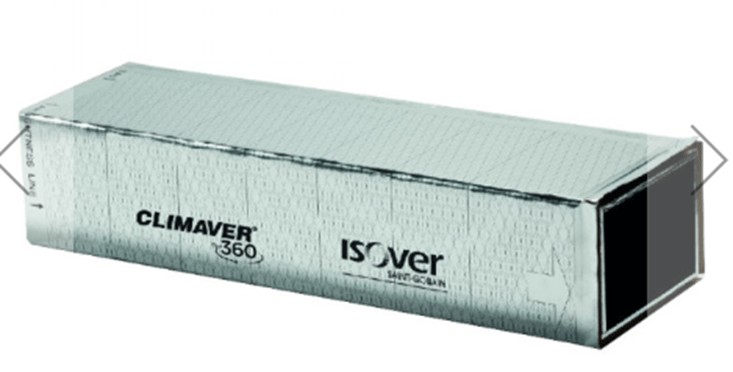
The exterior cladding reinforced aluminum with kraft paper and glass mesh or with reinforced glass mesh aluminum that acts as a vapor barrier
They must be equipped with watertight records that allow cleaning and disinfection.
In relation to diffusion, diffusers will be used with materials protected against oxidation and that allow the regulation and orientation of the air, and grids can be used in the return, conveniently distributed to guarantee recirculation in all areas.
management and control
The management and control system is part of the facility.
- In the dehumidifier unit it will be integrated by the manufacturer.
- They are usually standard controls corresponding to the variants of the complements that they integrate, focused on drying through the use of refrigeration equipment that is part of the dehumidifier unit.
- In the air conditioners, the system must be designed by engineering and allows it to be adapted to all the operating conditions, optimizing the maximum energy savings.
They will establish the necessary sequences in the units to regulate:
- schedules
- temperatures
- relative humidity
- air quality
- co2 (Prescriptive, taking outside air)
- Chlorine (taking concentration)
- Activate alarm signals
In addition to the controls of dehumidifiers or air conditioners, the field elements that are necessary to install:
- Outdoor temperature probe
- Indoor temperature probe or probes
- Outside relative humidity probe
- Indoor Relative Humidity Probes or Probes
- CO probe2 outside.
- CO probe or probes2 inside
- Chlorine concentration probes
Through all these analog signals and according to the established software, the operation of the installation is regulated, ensuring health, comfort and energy saving.
The operator will only establish the instructions at times of activity and out of activity.
Facility operation
It is necessary to distinguish between hours of activity and closing hours.
The operation must be fully automatic. Either for the software that the dehumidification unit is equipped with or for the software that has been designed for the air conditioner.
In the programming of slogans, the requirements of comfort and the regulatory provisions will be taken into account.
schedules
- days of activity
- hours of activity
- hours of non-activity
- non-activity days
hours of activity
- Maintain comfort parameters.
- Setpoints are set between maximum and minimum values.
- Temperature
- Humidity
- air quality (co2)
- Air quality (chlorine concentration)
hours out of activity
- temperature.
- In principle it is a parameter that is not important and must be left fluctuating.
- It will be analyzed if there is any condition that recommends setting a value.
- relative humidity.
- It is necessary to prevent it from exceeding the value that is set in the setpoint.
- A interval between a maximum and a minimum is established.
- air quality.
- It does not require control as there are no people.
Conclusions
The air treatment in heated pools is continuous, both in the hours open to the public, and in those that remain closed.
For this reason, it is essential to establish different slogans and modes of operation that guarantee comfort and optimize energy consumption, which are established based on the regulations of each country.
The energy consumption for air treatment is high.
Special attention must be paid to relative humidity, because it can cause the proliferation of fungi, molds or bacteria that develop in hot and humid environments and can cause respiratory conditions especially to sensitive people.
As a consequence of high relative humidity, coatings, installations and decoration elements are affected that reduce its useful life.
The relative humidity increases mainly due to the evaporation of the pool. There are other parameters such as latent heat due to the wet surface of the body, the activity and breathing of people, which in these cases have a much lower incidence.
Evaporation affects air treatment, swimming pool heating and replacement water consumption.
That is why the regulations establish the requirement to cover the pool outside the hours of use.
Another aspect in which the regulation affects is the recovery of the heat from the air that must be expelled, to maintain the conditions of health and comfort.
Special attention must be paid to the diffusion of the air so that it is carried out within the existing regulations and not from annoying currents in impulsions and returns that do not guarantee the total sweep in the walls to avoid humidity.
Regarding air treatment, you can use:
Small self-contained dehumidifiers to control only moisture.
- It requires a complementary air conditioner for the treatment of the rest of the parameters.
Dehumidifiers to control the pool enclosure, to which it is necessary to add sections of a climate control.
- The assembly is more complex
- Does not allow a fine adjustment.
- Energy consumption is much higher than the air conditioner.
air conditioners
- It is the most correct and most economical solution.
- It allows the adjustment of all the parameters, being able to maintain any setpoint.
- It requires a good design of the control system.
The air conditioners that are installed in a pool or spa must be equipped with fans with variable flow, which allow it to be adjusted to the needs of each moment.
Keep in mind that for many hours a year the relative humidity can be reduced by providing only and exclusively outside air with a lower content of water vapor, which achieves not only considerable savings, but also maximum comfort by providing a totally clean air.
In relation to the operation, it is necessary to set slogans to obtain maximum comfort within the period of activity, as well as establish energy optimization criteria in the closing periods.
In this case, the number of hours that the enclosure remains closed and that it is necessary to maintain are much higher. If the water sheet is not covered, in addition to failing to comply with the regulations, energy consumption is considerable.
- It is necessary to analyze the response of the installation so that it is operational at the time of its opening.
- It is advisable to maintain relative humidity at low levels as long as it is done without energy cost.
- Sufficient recirculation of air must be guaranteed to avoid dampness in walls.
With respect to the materials used in the distribution, it is recommended those that are not affected by moisture and contaminants, with smooth and resistant walls equipped with cleaning and disinfection registers.
Such an installation has to be managed by a controller that guarantees the operation set forth in setpoints.
operation during the activity
- Temperature, humidity, air quality, maximum and minimum range and alarms.
Operation when closed to the public
- Relative humidity can be achieved without energy consumption.
- Recommended relative humidity, when there is energy consumption.
- Minimum permissible temperature for pool water during closure.
- Minimum temperature for pool air during closing.
- Ventilation programming
- Order to pool water heating system
- Order to the air treatment system
- Activation of alarms
The thermal installations must be attended by qualified technicians who know the techniques applicable to them.
- The regulations for thermal installations requires preventive maintenance carried out by qualified companies that have to be perfectly documented.
- Good preventive maintenance reduces energy consumption, prevents breakdowns and increases comfort
We Resolve as a company of integral maintenance of unique buildings, with extensive experience and implementation in the hotel sector (in Spain and America), has a technical department in which the pathologies, integration, optimization and improvements that occur in the field of facilities are analyzed.
- In the case of air treatment in heated pools and spas, it is essential to maintain the necessary hygrothermal conditions at all times. because in addition to the facilities they affect construction and decoration parameters that have a high cost.
- Optimizing energy consumption represents a significant reduction in production costs, increasing sustainability and reducing environmental impact.
Literature
THERMAL INSTALLATION REGULATION
https://www.miteco.gob.es/es/energia/eficiencia/rite.html
Sedical technical program used for psychrometric diagrams.
https://www.sedical.com/software
Decree no. 485/2019 of the Ministry of Health and Families, of June 4. Approves the technical-sanitary regulations of the pools in Andalusia
Isover Climaver 360 Catalog
https://www.isover.es/documents/catalogos-manuales-y-guias/gama-climaver-2023-08.pdf
Energy optimization in refrigeration production in hotel facilities
23/09/2025
José Arroyo Martín
Ingeniero Tecnico Industrial en Electricidad y Mecánica