

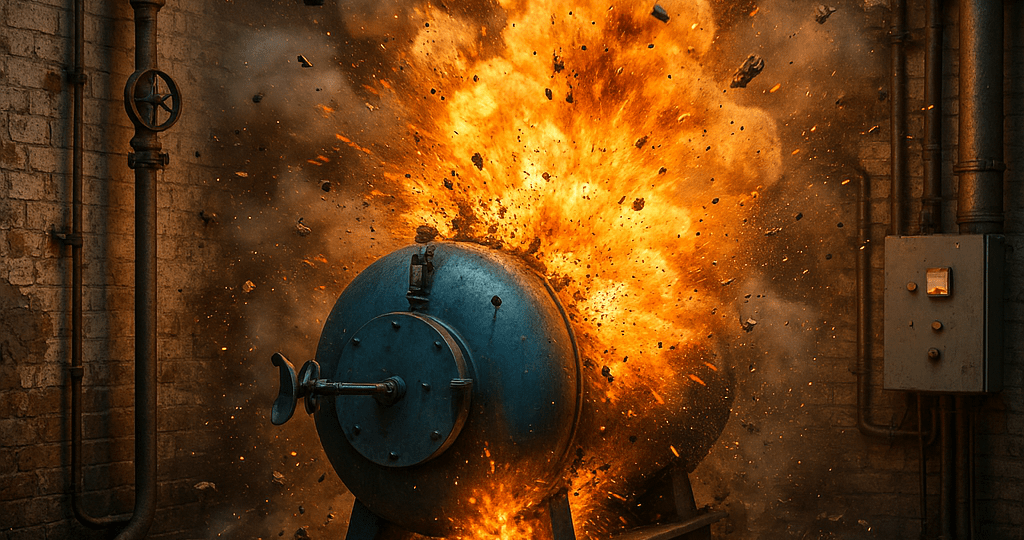
Thermal installations are essential for the development of hotel activity and constitute the set of facilities with a greater incidence.
They present risks that affect safety and health.
Given its importance, it is perhaps the set of installations subject to a greater regulatory requirement.
In this article, the set of requirements that affect safety and health, which are included in the regulations of the different countries, will be analyzed, taking as reference the latest requirements of the RITE (Thermal Installations Regulations in force in Spain) and complementary regulations.
There are aspects, such as the production and distribution of domestic hot water that present health risks, such as Legionella and that affects from the smallest hotel, to the largest hotel complexes.
In the production of refrigeration, through refrigeration towers, numerous cases of legionellosis have been detected, which has led engineers to advise the owners of the facilities to opt for safer techniques, even with a higher energy cost.
Other aspects are those that have to do with security. They work with relatively high pressures and temperatures, which can lead to serious accidents.
The thermal installations are quite safe, as long as they have been carried out through a good project, a good technical direction and, above all, it has good maintenance, which is totally mandatory and has to be carried out by qualified companies with technicians who present the degree of qualification required.
Unfortunately, hotel establishments in which cases of serious accidents have occurred, apart from the fact that the insurance has taken over or not the costs, (logically if it does not comply with the preventive maintenance, which is mandatory, they can avoid responsibility), they are involved in actions penalties, precautionary closures and above all a reputation that affects the entire chain and from which it is very difficult to escape.
The health and safety aspects are heavily monitored by tour operators, which may require at any time, to prove preventive maintenance and analysis results.
In 2023 alone, 2,294 cases of legionellosis and 190 deaths were recorded in Spain.
Facilities and equipment with risk of Legionella
Legionella is an environmental bacterium capable of surviving in a wide range of physical-chemical conditions, multiplying at temperatures between 20ºC and 50ºC. Its optimum growth temperature is between 35º C. and 37º C.
Treatment against Legionella affects not only thermal installations, but also all kinds of installations in which sanitary water intervenes.
In Spain
Royal Decree 487/2022, of June 21, establishing the sanitary requirements for the prevention and control of legionellosis.
Royal Decree 614/2024, of July 2, which modifies Royal Decree 487/2022, of June 21, which establishes the sanitary requirements for the prevention and control of legionellosis.
Annex I provides a non-exhaustive list of facilities and equipment, of which a large part of the thermal installations is part of the thermal installations.
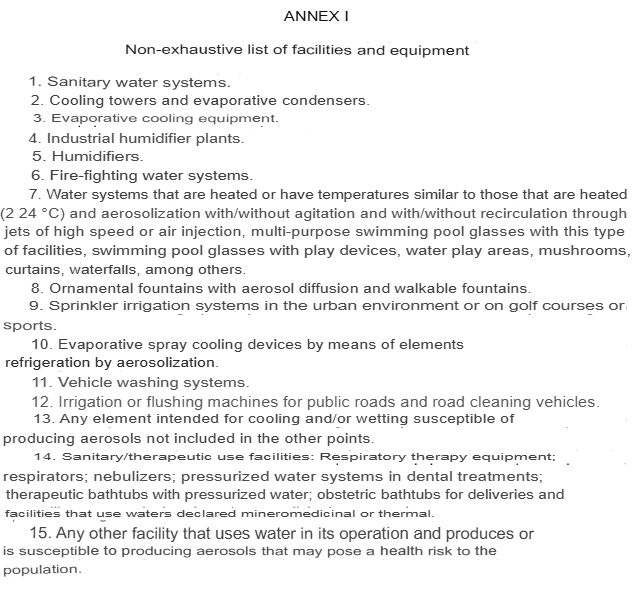
All these facilities that represent a potential health risk, have been conditioned over time to new demands, implementing security measures necessary to maintain healthy facilities.
In the case of ACS, it requires relatively high production and distribution temperatures.
In others, such as refrigeration production, water-water systems were not used long ago by means of cooling towers, which increase energy savings by decreasing the condensing temperature.
However, given the potential risk of water treatment failure, which requires exhaustive control, due to the spraying of water at temperatures in which the legionella has its maximum virulence, it has been opting for chillers and air-water heat pumps, which in This aspect of health is totally safe without presenting the slightest risk.
Domestic hot water production (ACS)
With regard to healthcare it is necessary:
- Produce domestic hot water at least 60ºC.
- Ensure a thermal shock at 70º C.
With respect to production, boilers or heat pumps are necessary.
- produce hot water primary circuit around 80º C.
which forces to take action due to the potential risk it presents:
- work with high temperatures.
- pressure increase due to expansion systems.
- Segurities of the installation of boilers based on locations and fuels.
- Own security if the installation is carried out with heat pumps depending on the type of refrigerant, such as flammability, toxicity, high pressures, etc.
Domestic hot water distribution (ACS)
They are made up of a domestic hot water network and a continuous return network in operation while the hotel is in service.
In Annex III Part A Point 7 h) of Royal Decree 487/2022 specifies:
- h) The sections of pipes in which water circulation cannot be ensured and a minimum temperature greater than 50º C may not have a length greater than 5 meters or a volume of stored water greater than 3 liters
This last provision contradicts the technical code that established branches of 15 meters in the derivations. (Logically, the decree against the Legionella prevails, which is more restrictive).
Several conditions are involved in the distribution:
- The water cannot leave the accumulator, interaccumulator or instant heating element at less than 60ºC.
- It can be distributed below 60º C., although at no point in the installation can it reach a temperature below 50ºC.
- The water cannot return to the furthest point of the installation at less than 50ºC.
User anomaly detection
The user of a hotel can detect anomalies that prevent him from the possible risk of legionella.
- If the water comes out of the tap at less than 50ºC.
- If it takes too long to get out of hot water.
Frequent pathologies
The most frequent pathologies usually occur in ACS return networks.
Return hot water return (ACS)
Whenever the hotel is in service, there must be a continuous recirculation of the domestic hot water, so that it does not cool below 50ºC. at no point in the installation.
The return has the mission of keeping the domestic hot water in continuous circulation and for this a small recirculating pump is used that causes this continuous movement.
Frequent pathologies are observed at high points of the installation in which air accumulates and for which the correct measures have not been taken, preventing recirculation through these branches, with which they cool.
As the temperature drops in unrecirculated water, there is a risk of legionella proliferation.
air quality
In the hotel facilities, it is necessary to guarantee a correct health in the quality of the air established in the official regulations of each country.
In Spain, health is regulated in:
- Thermal Installations Regulation (RITE)
- Technical building code (DB HS3).
- Only for enclosures that are not regulated by the RITE
In addition, there is a noise regulating arrangement.
- Technical building code (dB HR)
- noise protection
In the RITE, the quality of the indoor air is regulated in section IT 1.1.4.2 and that of the acoustic environment in IT 1.1.4.4
- A classification with respect to the air quality in each enclosure is established, depending on its use and ranging from “Ida 1” to “Ida 4”.
- IDA 1 highest quality
- IDA 4 Low Quality
- In hotel rooms for example Ida 3.
- Taking this classification as a reference, the conditions that must be maintained in the enclosures are established based on quantifying some of these parameters:
- ventilation levels
- perceived air quality
- CO2 concentration.
- Air flow per surface unit
- by application of the contaminant dilution method
To obtain the qualities, the air must be subjected to a filtration process.
This filtration will depend on the site of the building used to determine the quality of the outside air, called ODA, ranging from “Oda 1” to “Oda 3”
- ODE 1 highest quality
- ODA 3 Low Quality
air speed
A very important aspect for health and that can cause pathologies in people is that related to air speed.
A person who is seated and perceives a cold air current at a relatively high speed, apart from being annoying, can seriously affect his health.
In the RITE this point is regulated in IT 1.1.4.1.3 Average speed of air.
Humidity
Humidities can be caused by a poor ventilation system or inadequate regulations in relative humidity parameters.
In the hotels there are rooms such as heated pools, gyms or dance rooms in which a high latent heat is generated, which require a specific treatment of humidity.
When the relative humidity is high, condensation occurs on walls and elements of the enclosures in which fungi, molds, bacteria and mites that are harmful to human health develop.
odors from sewage
In the terminal units of air conditioning (climatizers and fancoils), condensations occur in summer that force the evacuation of water to the drainage network.
These evacuations are carried out through a siphon, which constitutes a hydraulic closure between the fancoil or air conditioner and the external evacuation network.
Sometimes improper connections have been made to fecal downspouts.
In winter when there is no condensation, the siphon dries up and the odors of the sewerage network enter the terminal unit, spreading through the enclosure.
Energy optimization in air treatment
The outdoor air treatment to maintain health conditions has a high energy consumption.
However, the levels of health, it is possible to maintain them with a relatively low energy cost.
When designing an installation, the designer usually goes to the ventilation flows indicated in Table 1.4.2.1 of the RITE.
Table 1.4.2.1 Outside air flows, in DM3/s per person.
| Category | DM3/s per person |
| Ida 1 | 20 |
| Ida 2 | 12.5 |
| Ida 3 | 8 |
| Ida 4 | 5 |
For example, a hotel room (Ida 2), for 200 people requires an outside air flow of:

Treating that airflow has a very high cost.
It will hardly be 200 people continuously in the room.
If at one time there are 15 people, the necessary ventilation is minimal.
placing probes that detect the level of CO2, the savings is considerable.
air ducts
The air that serves for the treatment of the different enclosures is distributed through ducts.
In installations prior to the implementation of the 2007 RITE, (of which there are still quite a few), there was no requirement for hygiene and prevention against pollution and the air was generally through fiberglass ducts without an interior coating.
Dirt, dust and moisture can accumulate in these ducts, especially when there were no records that would allow them to be cleaned.
They degrade over time by releasing microfibers due to the passage of air, which causes health risks of respiratory, ocular and skin type.
It may be convenient in some rooms to consider the replacement of these ducts, which, although not mandatory, would improve health conditions.
Currently they must comply with the regulatory specifications established in ITE 1.3.4.2.10 “Air Ducts” and ITE 1.1.4.3.4 “Service openings for cleaning of ducts and air plenums”.
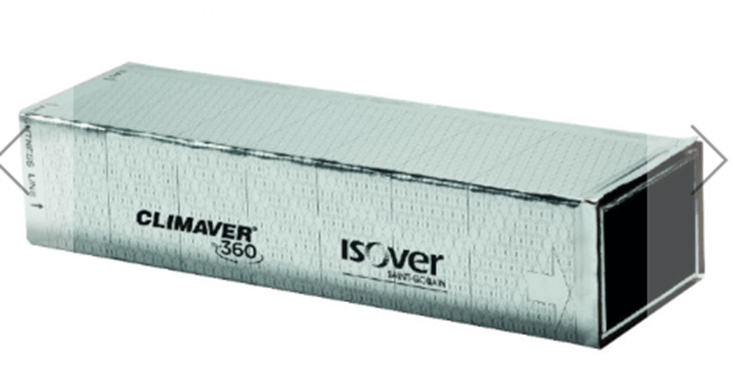
Among the mandatory maintenance functions is ‘Review and cleaning of air supply units’, so when accumulation of dirt, harmful particles or the presence of contaminants is detected, it is necessary to clean the duct network.
Filling of facilities
Thermal installations use to transmit energy, heat transfer fluids (usually water) that run through closed circuits.
They are filled and if there is no leak or repair, water should not be replenished.
A pressure reducing valve must be installed in the filling to supply the water at a certain pressure and a disconnector.
For health purposes, this article analyzes the function of the disconnector.
The closed circuits of thermal installations, run through pipes made for non-sanitary water and since they do not have continuous oxygen addition, use metallic materials that are not admissible for drinking water, as well as some additions of chemical products.
In no case can water pass from the closed circuit, to the sanitary water.
It is relatively easy in the event of a check valve failure, since the pressures in the closed circuits are higher than the supply of domestic water.
There are many facilities that present pathologies in their filling, when they are entrusted to a check valve. Being a mechanical element is susceptible to faults.
The regulations of the different countries and among them the RITE require security measures in the filling of facilities that guarantee no contaminations will occur in the drinking water network.
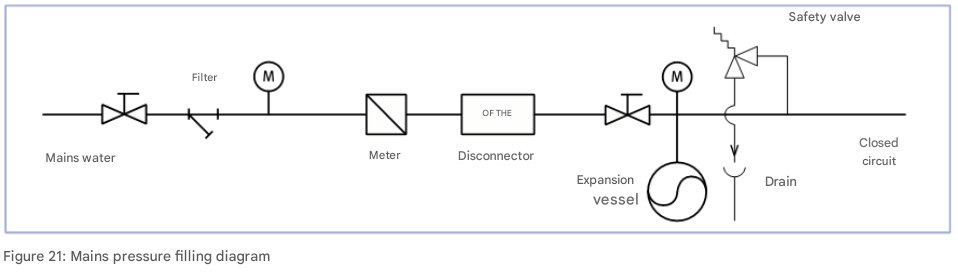
The disconnect is made up of two check valves and a discharge valve.
- Check valve at the inlet
- discharge valve
- Check valve at the outlet
Check valves prevent reverse flow of water.
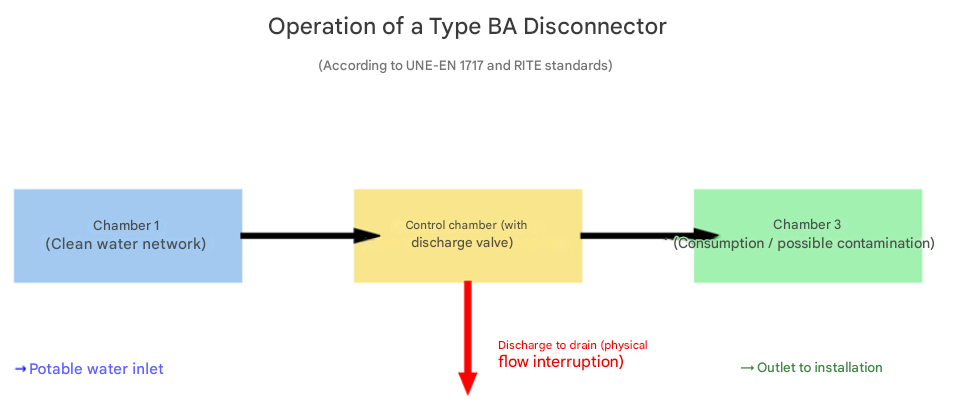
Chamber 1 is the check valve for the supply of domestic water.
Chamber 3 The closed circuit check valve is located
Chamber 2 the discharge valve is located
It worksENT
In normal operation, the pressure in the control chamber is somewhat lower than that of the drinking water supply chamber 1, and this is because the check valve 1 is kept closed by a spring or a lightweight counterweight system.
therefore:
Pressure in control chamber < supply pressure
Supply pressure drop
The disconnector is designed so that before the pressure in the control chamber, it reaches the delivery valve, the discharge valve is activated.
If it detects a pressure drop in the supply (camera 1), it automatically opens the discharge valve in the control chamber, which is at atmospheric pressure.
Installation valve break
If the installation valve fails (Chamber 3), a pressure rise is initiated in the control chamber.
That makes it start to increase and approach the supply pressure (Camera 1).
At that time, it automatically opens the discharge valve of the control chamber, leaving it at atmospheric pressure.
This prevents the water from the closed circuit from reaching the domestic water network.
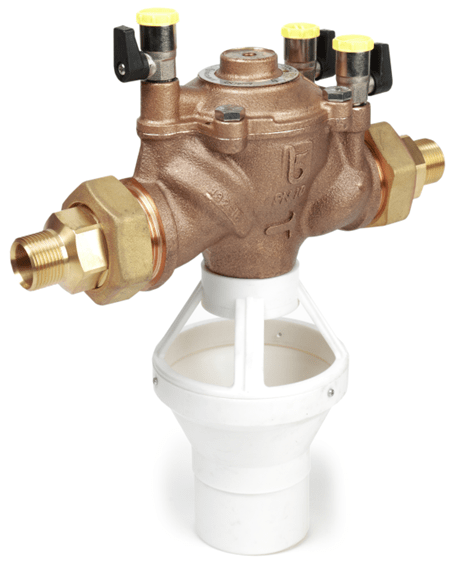
Giacomini disconnect (the discharge valve attaches to a drain)
Health Materials for Sanitary Water
A very important aspect in terms of health is the materials that are in contact with domestic water.
have undergone modifications over time.
Initially they were set in the Technical Building Code (DB-HS4).
Subsequently, a Royal Decree 3/2023 is developed that establishes the sanitary criteria of drinking water, based on European directives.
As of December 31, 2026, a “EU marking” will be mandatory for all materials that are suitable for contact with water for human consumption, throughout the European Union.
Another aspect that is modified are brass accessories, which were previously used without excessive restrictions and is now limited to brass that practically has an almost testimonial lead content (<= 0.02% Pb.).
It is common to see in sanitary water installations, some materials that are not only currently prohibited, but also at the time of their assembly and that in the water analysis required by Royal Decree 3/2023, can give untolerable results regarding health.
As an example:
- regulation valve.
- safety valves (those that are installed in drinking water, for example accumulators).
- pressure reducing valves.
- mixing valves.
- fittings and accessories.
- purgers.
- expansion tanks.
- Circulation pump groups.
- etc. etc.
Analysis of overwhelms
When a body heats it dilates.
Thermal installations use liquid fluids (normally water), to transport thermal energy between the elements that produce it (boilers, heat pumps, chillers, solar energy, etc., etc.), to the terminal units (fancoils, air conditioners, heat exchangers, hot water, etc. etc.)
Water has its maximum density around 4º C.
One property that liquids have is that they are practically incompressible. Very high pressures would be needed to compress a liquid at least and always far from the pressures used in thermal installations.
However, the gases are easily compressible.
Therefore, in the closed circuits of thermal installations, it is necessary to place expansion devices, in which gases are used.
To speak with orders of magnitude that help understand overpressures, you can analyze the volume that occupies 1,000 liters of water at different temperatures.
water temperature at 4ºC. 1,000 liters
water temperature at 15ºC. 1,000.87 liters
water temperature at 50ºC. 1,012.06 liters
water temperature at 80ºC. 1,028.99 liters
when going from 4ºC. At 80ºC., the 1,000 liters of water become 1,029 liters.
If a closed circuit is filled with cold water, when heated to 80ºC, it needs a space of 29 liters and being closed and not being able to expand it increases the pressure on the walls by destroying it.
To prevent it from happening, it is necessary to install expansion vessels with a sufficient amount of air to absorb the 29 liters in which the volume of water is increased between tolerable working pressures, which can withstand the elements.
For example, if a boiler is built for a pressure of 6 bar, the expansion must be calculated so that it never reaches that pressure under the most unfavorable operating conditions.
Protection of thermal installations
In the analysis of overpressures and given the physical properties of the fluids, in closed circuits the following occurs:
- Liquids are practically incompressible.
- Closed circuits have a fixed volume.
- The expansion vessels absorb the increase in volume that occurs in the installation when it dilates by heating.
- The elements that are part of the facilities are manufactured for relatively low operating pressures. (On the order of 6 bar)
- If a failure in the expansion vessels occurs in an installation, the overpressure that occurs is very high.
It may happen that due to a failure in the inflation valve of the vessel, the air or nitrogen escapes, or that the separation membrane air or nitrogen and the water, breaks.
If that happens the gas (air or nitrogen), it ends up dissolving in the water and therefore the pressure of the circuit would be increased and the element that supports a lower pressure would be destroyed.
That could have catastrophic and extremely serious consequences (suppose the explosion of a boiler due to overpressure).
Therefore, it is necessary to install safety elements in the circuit that protect from these overpressures.
These elements must have sufficient guarantee, either by installing more than one as usual and verifying the correct operation of the same in the maintenance inspections.
They cannot have interposed closure elements that prevent them from being isolated from the circuit.
In thermal installations, elements are used, which, apart from meeting the requirements of the RITE, are subject to other regulations such as those of pressure vessels, (case of boilers, accumulators, expansion equipment, etc., etc.), which are affected by a series of additional requirements, especially in terms of security.
In the case of generators, such as boilers, they come from the factory, equipped with a series of control devices that regulate their operation and that are complemented by other installations.
- safety valve
- Maximum pressure pressure switch
- Alarm device Low water level
- Safety device Minimum water level
- Flame detector
- Security thermostat
- Regulation thermostat
- expansion vessel
- Gas cut valve
- etc. etc.
Thermostats
They disconnect when the circuit reaches the preset temperature, acting as a safety element in the limit temperatures.
Example
- The boilers have a thermostat that regulates its operation and a safety thermostat that leaves it out of service if it reaches a certain temperature.
Pressure switches
They disconnect when the circuit reaches the preset pressure, acting as a safety element in the limit pressures.
Example
- The cooling plants have a safety pressure switch, which when the refrigerant exerts a pressure greater than the maximum established, disconnects the chiller plant.
- Expression is frequent in summer, it has jumped by high
- That high is high pressure.
pyrostats
They control the temperature of boiler fumes.
Upon reaching a certain value, disconnect the burner.
Its performance is similar to the thermostat.
Although the RITE does not require it in an exhaustive way, it is a protection element that may be recommended.
safety valves
Within the safety valves, two types are distinguished:
- Quick and instant download
- They are called a safety valve
- Progressive download
- They are called relief valve
The RITE requires in closed circuits the obligation to install these valves.
IT 1.3.4.2.5 Closed circuits

2. In the case of heat generators, the safety valve will be sized by the generator manufacturer.
safety valve
It is an automatic valve that opens quickly and completely when a certain pressure is reached and serves to avoid explosion due to overpressure that can cause serious accidents to people and destroy elements.
Safety valve discharge conduction
The discharge of the safety valve must be visible and carried to the evacuation point with a pipe with a diameter not less than that of the valve.
It is necessary to prevent the water, generally at a very high temperature, from falling on any person located in its vicinity.
Different pipes must be placed between each valve and its evacuation point. Between the discharge of the valve and the evacuation point there should be no shut-off valve.
relief valve
It is a safety valve.
The only difference is that it opens and closes gradually and progressively.
Relief valve discharge will be carried out according to the criteria indicated.
Regulatory requirements Installation safety valves
In all closed circuits in which temperature increases occur and consequently of pressure, mechanical safety devices are necessary.
In the case of generators such as boilers, safety valves.
In the case of closed circuits in which only temperature variation occurs, relief valves.
For installations of a certain importance, the mechanical safety elements transcend the RITE’s competences, being regulated by the regulations of pressure equipment REP (RD 809/2021).
Between the safety and relief valves and the hydraulic circuit they protect, no shut-off valve can be interposed.
If it is possible to place a cut-off valve between the circuit and the expansion devices.
Safety valve assembly
Assemblies of the safety valves are necessary based on technical criteria that are of great importance in the maintenance of the installations.
It is part that:
- Between the safety valve and the installation there can be no cut-off element.
- Verification of the safety valve in the installation itself can be problematic and requires disassembly.
- It occurs, for example, in some boilers by requirement of the Pressure Equipment Regulation (REP).
- The safety valve is an element that has a limited life, either because it presents a problem, or because its replacement is agreed (the manufacturers recommend it).
Whenever a safety valve needs to be disassembled, it is necessary to partially empty the circuit.
These are closed circuits in which the addition of water is not recommended.
The location of the safety valves is very important so that the loss of water in the closed circuit is minimal when it requires disassembly.
It is recommended to install more than one per circuit.
Checks of safety valves.
Safety valves is the most important element of protection of hydraulic circuits.
Without a safety valve, if the circuit loses its expansion, high pressures are generated that can cause very serious accidents when exploding due to overpressure elements with a high risk, such as the boiler, expansion vessels or any element, even sections of pipe that have been weakened.
For this reason, the RITE establishes in Table 3.3 of Preventive Maintenance the mandatory monthly revisions
17: Checking security elements.
This requirement can be misleading.
In reality, in these inspections, what must be verified is that the valve does not present leaks, corrosion, drips, or obstructions and that it can be activated to verify its operation.
It does not mention that any hydraulic test or recalibration is carried out.
However, there are safety valves that are part of the protection of pressure equipment, such as boilers, which are also subject to pressure equipment regulations (RD 809/2021).
In that case and due to the requirement of the REP, verification of the delay is required and a periodicity is set based on the category of the installation.
Maintenance
In everything related to safety and health, good maintenance is essential.
In thermal installations, this maintenance is mandatory and must be carried out by qualified companies that have personnel with the qualification required by current legislation.
In some cases there are activities collected in the RITE such as Legionella and pressure equipment, regulated by royal decrees with specific developments of complementary actions.
In the RITE (IT 3.3 Preventive Maintenance Program), a series of actions related to health and safety are established.
Most of them require revisions, cleanings and maintenance that have an impact on health and safety.
others that affect very specific aspects:
- Condenser cleaning: t.
- Draining, cleaning and treatment of the cooling tower circuit: 2 t.
7. Boiler Burner Cleaning: M.
8. Expansion vessel revision: M.
12. General review of gas boilers: t.
13. Overview of diesel boilers: t.
14. Checking water levels in circuits: m.
17. Security Item Check: M.
19. Air Filter Review and Cleaning: M.
24. Air Distribution Terminal Unit Review: 2 T.
25. Revision and cleaning of drive and return air units: t.
28. Review of the domestic hot water preparation system: m.
37. Revision of the network of ducts according to the criteria of the UNE 100012 standard: t.
S: Once every week.
S*: These operations may be carried out by the user himself, with the prior advice of the maintainer.
M: Once a month; The first at the start of the season.
T: Once per season (year).
2 T: Twice per season (year); one at the beginning of it and the other at the middle of the period of use, provided that there is a minimum difference of two months between the two.»
The cleaning of condensers is essential to maintain the pressure of the machines within tolerable values, in addition to achieving energy optimization in the production of air conditioning.
Refrigeration tower treatments are essential, due to the potential risk of legionella proliferation.
The expansion vessel must perform its function to prevent overpressure in the installation and prevent the actuation of safety valves.
In relation to boilers there are many controls that require verifying their operability.
With regard to point 17 any failure in the safety system can cause serious accidents.
Maintaining with the due requirements of health the treatment and distribution of air is essential for the health and well-being of people.
Reviewing the domestic hot water system is essential to ensure that the requirements for the treatment of Legionella are met. In addition to guaranteeing safety and health aspects, good preventive maintenance, optimizes energy consumption and lengthens the useful life of machinery, elements and equipment.
Conclusions
Thermal installations present health and safety risks that are necessary to control with good maintenance.
In the production and distribution of domestic hot water, there is a high risk of legionella bacteria developing.
The supply of air to maintain the hygrothermal conditions required by the enclosures requires a series of quality measures based on the category of the enclosures.
Clean, filtered and treated air must be guaranteed, without contaminants, at the right speed, avoiding excess moisture that may condense on the walls.
Air treatment is a process that requires a relatively high energy consumption, so it is necessary to always analyze the options that with a minimum energy consumption, the required health requirements are obtained.
The air distribution ducts have to ensure that they do not provide dirt, dust, moisture or microfibers, which cause health risks of respiratory, ocular or skin.
Thermal installations are made up of closed circuits and executed with materials not suitable for sanitary water to which chemicals are sometimes added.
It is necessary to avoid that in the event of a breakdown, the water contained in the closed circuits comes into contact with the domestic water that is used in the filling and partial contributions when a leak occurs.
To do this, it is necessary to use specific elements to avoid it, such as disconnectors, which in the event of a failure evacuate directly to the drainage network.
The current legislation is very rigorous with the materials used for sanitary water.
It is observed in sanitary water installations inadequate materials typical of closed systems, which cause contamination of them above the tolerable limits and that can be evident in the mandatory analyzes that require other regulations other than RITE.
Every body that heats up dilates and the heat transfer fluids (generally water), when they increase their temperature, also increase their volume.
In this case, it is found with a closed circuit that prevents its expansion, so since liquids are practically incompressible, they exert a very high pressure on the elements of the circuit.
To avoid this and that this pressure remains within the limits for which the machinery elements and equipment have been built, it is necessary to install expansion devices in the circuit (expansion vessels).
These expansion vessels have a part of nitrogen or air separated from the water by a membrane, which is pressed by increasing the volume of water and allows the installation to function between tolerable values, always at a lower pressure than the admissible in the installed elements.
If for some reason, such as failure in the inflation valve of the expansion vessels or breakage of the membrane that causes its mixture with the air, the air mattress is lost, the pressures that are exerted on all the elements of the circuit are very high and this can cause the explosion by overpressure of the elements installed.
The consequences can be very serious for people in the environment.
To avoid this, safety valves are installed (some that open completely like those that are installed in generators) and others gradually also call for relief that are installed in the hydraulic circuits.
In addition to the safety valves, there are other elements, such as thermostats, pressure switches or pyrostats that act as limiters by disconnecting the generators.
In relation to safety valves, they must be installed directly on the circuit that they protect without putting any intercepting element that allows maintenance or disassembly, so if it is necessary to remove it, it will inevitably empty a part of the hydraulic circuit that it protects with the undesirable consequences of supply. of air and water to the closed circuit.
It is important that in all safety valves, it is possible to visualize its discharge and be taken to safe evacuation places, preventing its shot from reaching anyone located in the environment.
In installations of some importance, safety valves require maintenance and a recalibration verification required by the Pressure Equipment Regulations.
If maintenance is mandatory in all thermal installations, in health and safety it is totally necessary, due to the health problems and the high risks of an overpressure explosion, which can lead to criminal actions, precautionary closures and, above all, the reputation that affects the chain and which is difficult to escape.
The thermal installations must be attended by qualified technicians who know the techniques applicable to them.
- The regulations for thermal installations requires preventive maintenance carried out by qualified companies that have to be perfectly documented.
- Good preventive maintenance reduces energy consumption and avoids safety and health risks.
We Resolve as a company of integral maintenance of unique buildings, with extensive experience and implementation in the hotel sector (in Spain and America), has a technical department in which the pathologies, integration, optimization and improvements that occur in the field of facilities are analyzed. In the case of safety and health treatment, it has extensive experience, which allows the necessary guarantees to maintain the facilities within the required health and safety parameters.
Literature
THERMAL INSTALLATION REGULATION
https://www.miteco.gob.es/es/energia/eficiencia/rite.html
Royal Decree 809/2021, of September 21, which approves the Regulation of pressure equipment and its complementary technical instructions.
https://www.boe.es/diario_boe/txt.php?id=boe-a-2021-16407
Royal Decree 3/2023, of January 10, which establishes the technical-sanitary criteria of the quality of the water for consumption, its control and supply.
https://www.boe.es/buscar/act.php?id=boe-a-2023-628
Royal Decree 487/2022, of June 21, establishing the sanitary requirements for the prevention and control of legionellosis.
https://www.boe.es/buscar/act.php?id=boe-a-2022-10297
Royal Decree 614/2024, of July 2, which modifies Royal Decree 487/2022, of June 21, which establishes the sanitary requirements for the prevention and control of legionellosis.
https://www.boe.es/buscar/doc.php?id=boe-a-2024-13422
Comments to Rite 2007
Technical guide Water air conditioning installations
Isover Climaver 360 Catalog
https://www.isover.es/documents/catalogos-manuales-y-guias/gama-climaver-2023-08.pdf
Safety and relief valves
28/10/2025
José Arroyo Martín
Ingeniero Tecnico Industrial en Electricidad y Mecánica